How Prescription Payment Kiosks Can Support NHS Cost Improvement Programmes
Now more than ever, NHS trusts need to ensure they are saving every penny and generating additional income in order to continue providing the best service possible to their patients.
With NHS organisations under continued financial and cost pressures, Cost Improvement Programmes (CIPs) remain an important way of identifying efficiency savings, improving productivity and making better use of existing resources. The challenge is delivering those improvements without negatively affecting patient care or placing additional pressure on the workforce.
With that in mind, we believe that cost improvement managers and cost recovery managers that work for the NHS should be considering the introduction of self-service payment machines when it comes to selling prescriptions. And here are 5 reasons why.
At VincoPay, we see prescription payment kiosks as one practical technology that can support a wider NHS Cost Improvement Programme. By automating routine payment processes, capturing eligible income and providing clearer payment data, kiosks can contribute to both efficiency plans and income generation initiatives.
1) Directly Combat Revenue Loss

Revenue can be lost when patients who are required to pay for prescriptions receive them outside the hours of conventional payment facilities. Traditional payment systems often rely on manned counters that operate during specific hours, leaving a gap in the coverage for prescription payments outside these times. This gap not only contributes to revenue leakage but also poses challenges in maintaining accurate financial records.
Self-service payment kiosks can play a pivotal role in addressing this specific challenge. By providing a 24/7 payment option, these kiosks ensure that individuals can settle their prescription fees even during non-operational hours.
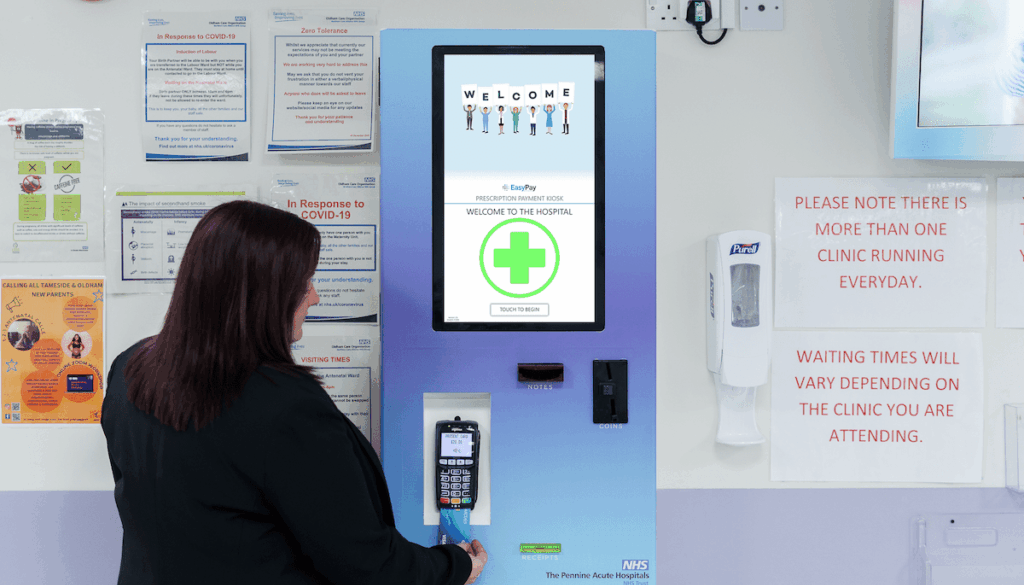
Our prescription payment kiosks allow patients to make secure debit card or contactless payments at any time of the day or night, making them particularly suitable for pharmacies, ED, SDEC, CDU, RAU and Ambulatory Care.
This not only helps in capturing revenue that might be lost otherwise but also aligns with the evolving demands for accessibility and convenience in healthcare services.
The implementation of self-service payment kiosks effectively extends the window for revenue collection, helping reduce missed payment opportunities when manned counters are closed. This proactive approach to payment processing aligns with the financial goals of NHS trusts, ensuring that revenue is captured promptly and comprehensively.
For an NHS Cost Improvement Programme, this matters because improvement does not always have to come from reducing expenditure. Recovering income that an organisation is already entitled to collect can also support stronger financial performance and make better use of existing services.
2) Eliminate the Debt Collection Model

Moreover, the convenience offered by self-service payment kiosks can positively influence patient behaviour. Rather than receiving their prescriptions and then the hospital having to chase them up for payment (often to little joy), our self-service prescription payment machines enable individuals to easily and conveniently pay for their prescriptions first.
This not only benefits hospitals in terms of immediate revenue but also contributes to better financial planning and stability.
Collecting payment while the patient is already onsite can also remove work further down the line. An unpaid prescription may create additional administrative tasks for finance or pharmacy teams, from recording the outstanding amount to following up the payment and reconciling it once received.
Reducing that follow-up activity contributes to the wider goal of reducing waste within cost improvement programmes. Instead of allocating staff resources to avoidable payment administration, NHS organisations can use self-service systems to make the process more efficient from the outset.
It is a relatively simple example of how digital transformation can support cost improvement by redesigning a repetitive process rather than simply asking staff to work faster.
3) Cost Savings for the NHS
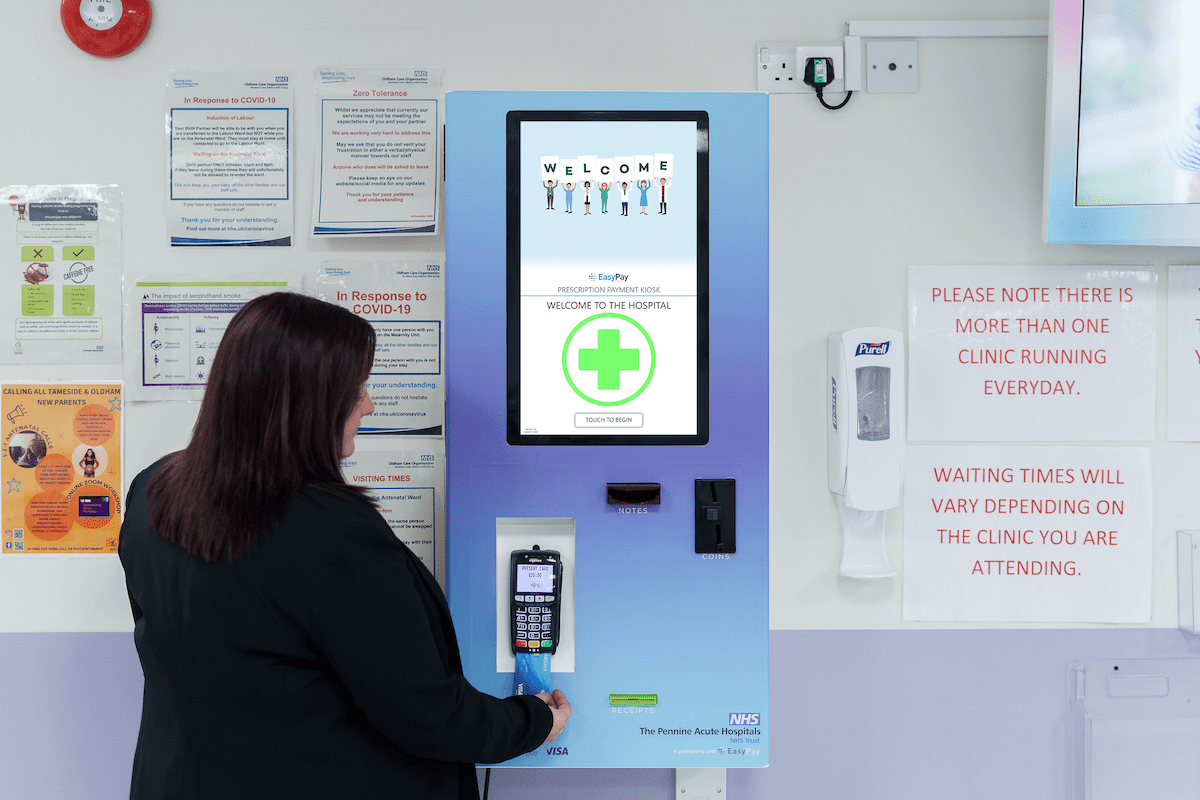
By introducing self-service payment kiosks, NHS Cost Improvement Managers can support significant cost savings. Traditional payment methods often involve manual handling, leading to increased labour costs and potential errors.
Moreover, self-service payment kiosks can streamline administrative tasks related to payment processing. The reduction in paperwork and manual record-keeping not only saves time but also minimises the likelihood of errors, leading to potential cost savings associated with rectifying mistakes and reconciling accounts.
This is where payment automation can fit naturally alongside broader efficiency projects. Cost improvement programmes are most sustainable when they improve the underlying process rather than simply remove resources from it.
The wider NHS productivity picture also demonstrates why improving everyday processes remains important. According to the Office for National Statistics, healthcare productivity in England increased by 1.5% in the financial year ending 2024, with healthcare output increasing by 4.7% compared with a 3.2% increase in inputs. However, productivity remained around 3.9% below pre-pandemic levels.
While a self-service payment kiosk is only one relatively focused intervention, automating repetitive administrative tasks can contribute to the broader effort to use existing staff time and resources more efficiently.
Our hospital payment kiosks allow eligible payments to move away from reception, pharmacy and administrative teams and into a consistent self-service process. This can support workforce productivity while allowing clinical and operational staff to focus more of their time on patient care.
The benefits can extend across a range of services too. The same self-service approach can be adapted for prescription payments, maternity scan images and other eligible hospital payments, allowing organisations to consider payment technology as part of wider transformational programmes rather than an isolated project.
4) Payment Security and Compliance
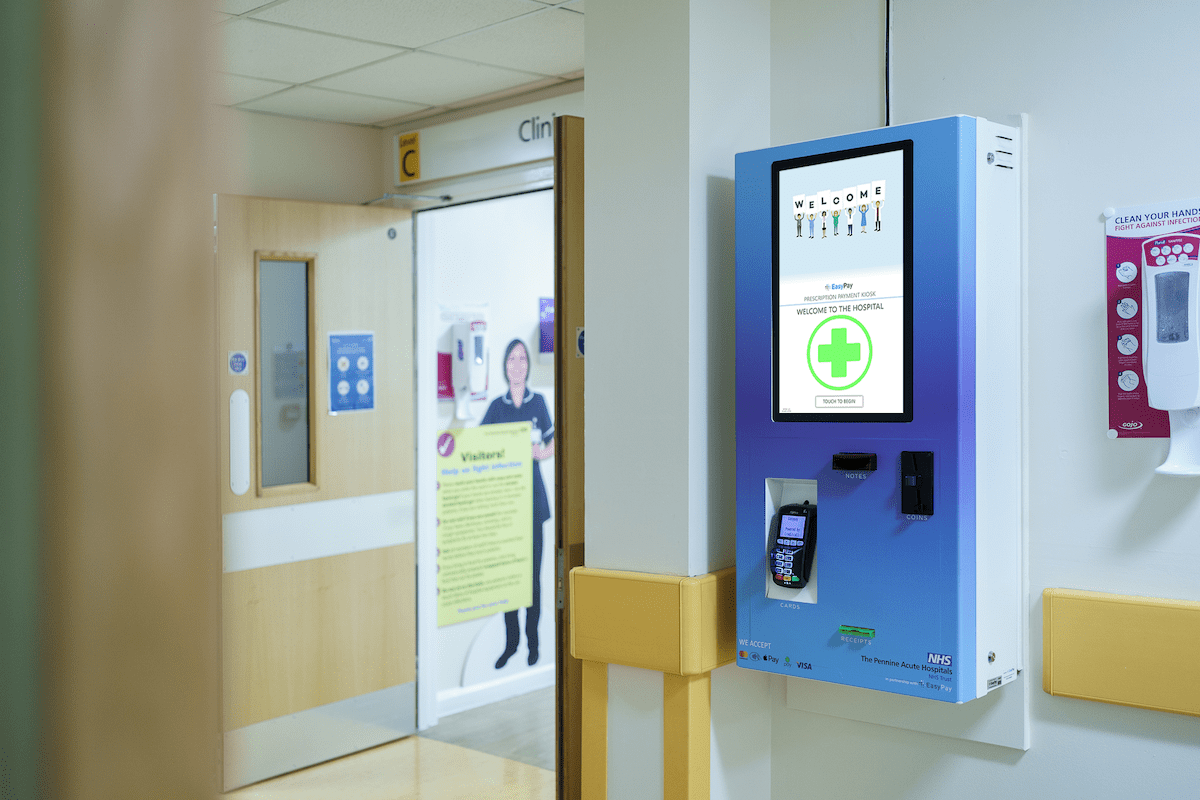
At VincoPay, we prioritise the security of financial transactions. Our self-service payment kiosks are designed around secure payment processing and support 3D Secure and PCI DSS compliant payment solutions.
This focus on payment security helps NHS organisations provide a reliable self-service payment route while meeting the compliance requirements associated with financial transactions.
Cost improvement cannot be considered separately from quality and safety. NHS England guidance makes clear that proposed cost improvement plans and efficiency savings programmes should consider their impact on care quality, so implementing a new payment system needs to account for security, reliability and the patient experience as well as financial value.
Our secure payment platform can integrate with existing financial systems, helping NHS organisations introduce payment automation without creating an unnecessary parallel process for staff. You can read more about our hospital payment kiosks.
5) Real-Time Reporting and Analytics
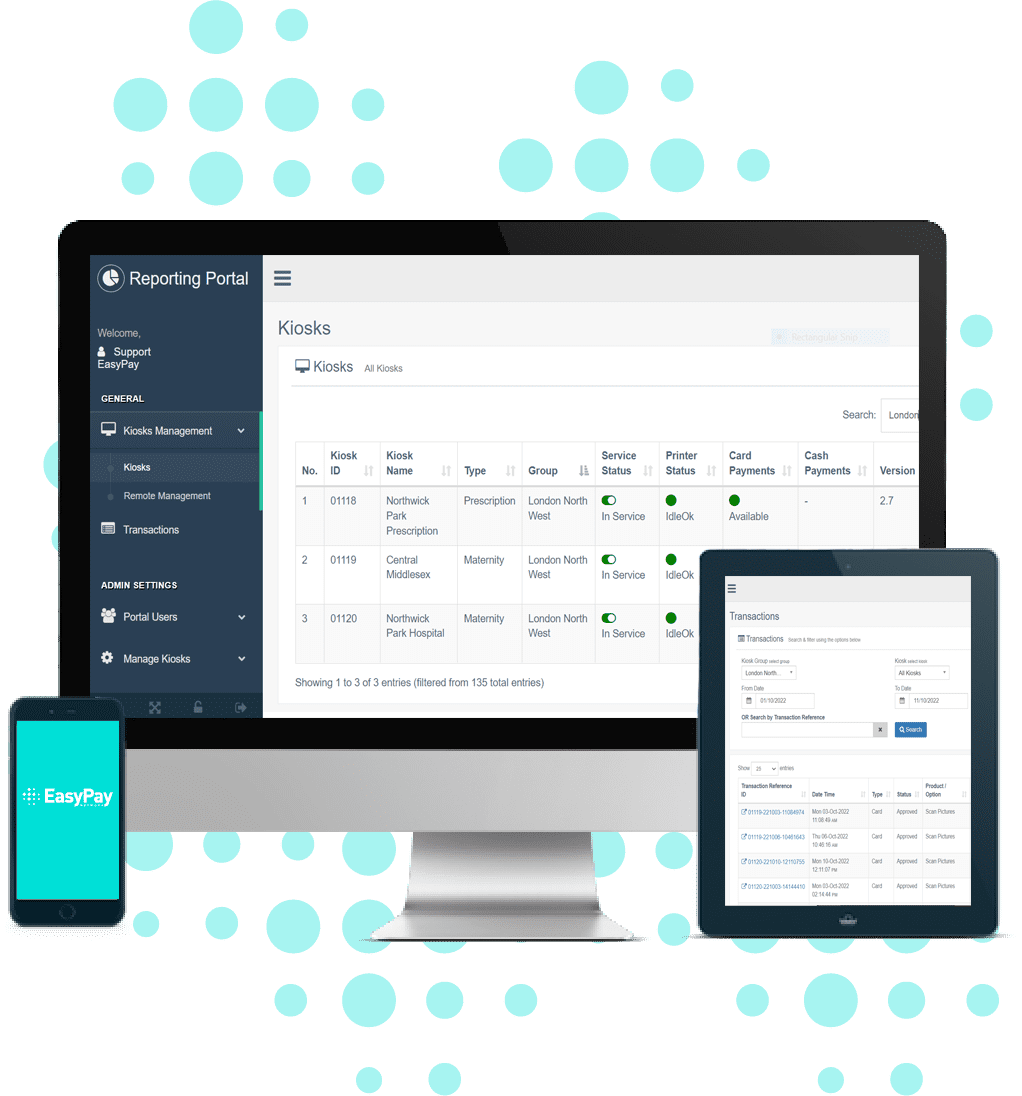
Effective decision-making requires accurate and timely information. Self-service payment kiosks from VincoPay offer real-time reporting and analytics capabilities. NHS Cost Improvement Managers can access valuable insights into payment trends, helping them make informed decisions to further optimise financial processes.
Through our VincoPay software, authorised users can quickly view transaction data and real-time reports, track usage and create clear audit trails. This can make it easier for finance teams to understand how a project is performing and whether expected benefits are actually being delivered.
For teams managing cost improvement programmes, measurable outcomes are essential. If a kiosk forms part of a CIP scheme, data can help demonstrate transaction volumes, identify changes in revenue collection and support project highlight reports or wider financial reporting.
That visibility also gives senior leaders and other stakeholders better evidence when reviewing the success of individual cost improvement initiatives and deciding where similar projects could provide value elsewhere within the organisation.
Where Do Payment Kiosks Fit Within a Cost Improvement Plan?
A prescription payment kiosk should not be viewed as a standalone answer to NHS financial pressures. It is more useful to consider where it can contribute to a broader NHS Cost Improvement Programme and its identified objectives.
For example, an NHS Trust may have projects focused on workforce productivity, improving income collection, reducing administrative costs or introducing more efficient digital systems. A self-service payment project could support several of those objectives at the same time.
Before implementing a kiosk, organisations should establish the current process and costs, identify what improvement is expected and agree how success will be measured. That might include staff time released, additional revenue captured, reductions in manual payment handling or improvements in payment availability.
Clinical, operational and finance engagement is also important. The best improvement programmes are managed with an understanding of how a change affects staff and patients, rather than focusing on a financial target in isolation.
Supporting Sustainable Efficiency Savings
Effective cost improvement is about achieving better value from available resources while protecting the quality of services. Current NHS planning places a strong focus on productivity, technology and more efficient models of care, making well-targeted automation increasingly relevant to organisations developing their efficiency plans.
Self-service payment is a relatively focused change, but it can address several common sources of inefficiency at once: manual processing, missed income, avoidable follow-up work and limited visibility over transactions.
Our kiosk benefits include reducing pressure on staff resources, improving operational efficiency and providing real-time payment data. For NHS leaders considering potential CIP schemes, those are practical outcomes that can be included within a clearly defined project plan and monitored after implementation.
How VincoPay Can Support Your NHS Cost Improvement Programme
At VincoPay, we’re ready to collaborate with NHS stakeholders, drawing on our experience designing, building, manufacturing and installing self-service payment kiosks for healthcare environments.
Our aim is to help NHS organisations create payment processes that are more efficient for staff, convenient for patients and easier for finance teams to monitor. We can tailor our kiosks and software around the requirements of the individual Trust, department and services involved.
If prescription payment processing has been identified as an opportunity within your NHS Cost Improvement Programme, contact us to discuss how self-service technology could support your efficiency, productivity and income generation objectives.
Frequently Asked Questions
What is an NHS Cost Improvement Programme?
How can prescription payment kiosks contribute to efficiency savings?
Can prescription payment kiosks support income generation as well as cost reduction?
How can NHS organisations measure whether a kiosk project is successful?
Will introducing a self-service kiosk affect patient care?
Can VincoPay tailor a kiosk to an individual NHS Trust?