How Prescription Payment Kiosks Reduce Staff Workload in NHS Settings
We’ve talked about how our self-service prescription payment machines are better for income generation and better for your patients, but we’ve seen time and time again how they benefit the staff working every day in your pharmacy or A&E department.
For busy NHS teams, taking a prescription payment can sound like a relatively minor administrative task. Across hundreds or thousands of patient interactions, however, those small tasks quickly add up. Staff may need to explain how to pay, process transactions, provide receipts, deal with cash or help patients who need to make a payment outside normal finance-office hours.
By moving more of that process to self-service, prescription payment kiosks can reduce repetitive administrative work and give staff more time to focus on patients, clinical responsibilities and the wider running of the department.
1. Reduced Workload and More Time for Clinical Work

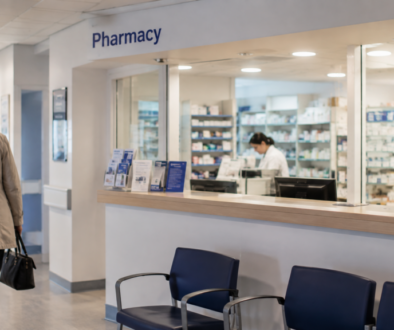
Prescription payment machines alleviate the burden on staff by automating the payment process. With patients able to make payments effortlessly through our self-service kiosks, the administrative workload on A&E receptionists and pharmacy staff is considerably reduced. This allows them to focus more on crucial clinical work, providing better patient care and expediting services.
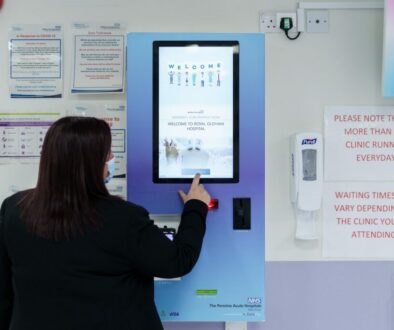
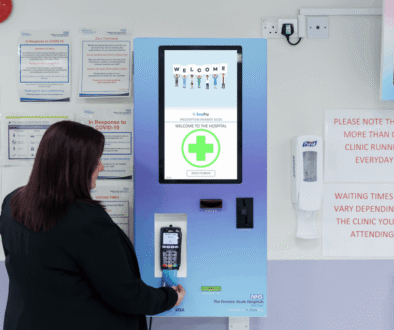
With our prescription payment kiosks, patients can make secure card or contactless payments themselves and receive a receipt to present when collecting their prescription. That removes the need for a member of staff to be directly involved in every transaction.
For departments dealing with high patient volumes, the benefit is cumulative. A few minutes saved on each prescription payment can free up a meaningful amount of staff time over the course of a day, particularly during busy periods.
It also gives NHS Trusts a more consistent payment process. Rather than different members of staff handling payments in different ways, the kiosk guides patients through a defined journey and captures the information needed to complete the transaction.
2. Cashless Transactions for a Hygienic Environment

Handling cash can introduce hygiene concerns, especially in healthcare settings. Prescription payment machines eliminate the need for cash transactions, promoting a more hygienic environment.
For NHS organisations moving towards predominantly cashless payment environments, self-service kiosks can also reduce the amount of physical cash staff need to receive, count, store and reconcile. The reduction in cash transactions also minimising the risk of theft or break-ins, at a time when hospitals need to maximise their income without worrying about unnecessary losses.
Reducing manual cash handling has an operational benefit as well as a security benefit. Pharmacy and reception teams do not need to spend as much time dealing with change, balancing cash or resolving discrepancies at the end of a shift.
Our kiosks support secure debit card and contactless payments, helping make the patient payment journey quicker while removing another routine task from frontline staff.
3. Uninterrupted Reception Services
With prescription payment machines handling transactions, receptionists in A&E departments can dedicate more time to assisting patients and managing enquiries.
The absence of manual payment processing ensures that the front desk remains operational, providing a seamless experience for patients and allowing staff to focus on delivering exceptional service.
This is particularly valuable in hospital environments where services continue well beyond conventional administrative hours. A&E departments, urgent care pathways and hospital pharmacies may still be supporting patients during evenings, nights, weekends and bank holidays, even when other payment facilities are closed.
Our kiosks can give patients a way to pay for eligible prescriptions without requiring reception or pharmacy staff to become the payment desk. That supports 24/7 payment collection while keeping staff available for enquiries and patient-facing responsibilities that genuinely require their involvement.
It can also help reduce queues. When patients who simply need to make a payment can complete the process independently, staff can spend more time helping people with more complex questions or clinical needs.
You can find out more about how the technology works across different hospital departments on our hospital payment kiosks page.
4. Robust Analytics and Reporting for Back-Office Staff
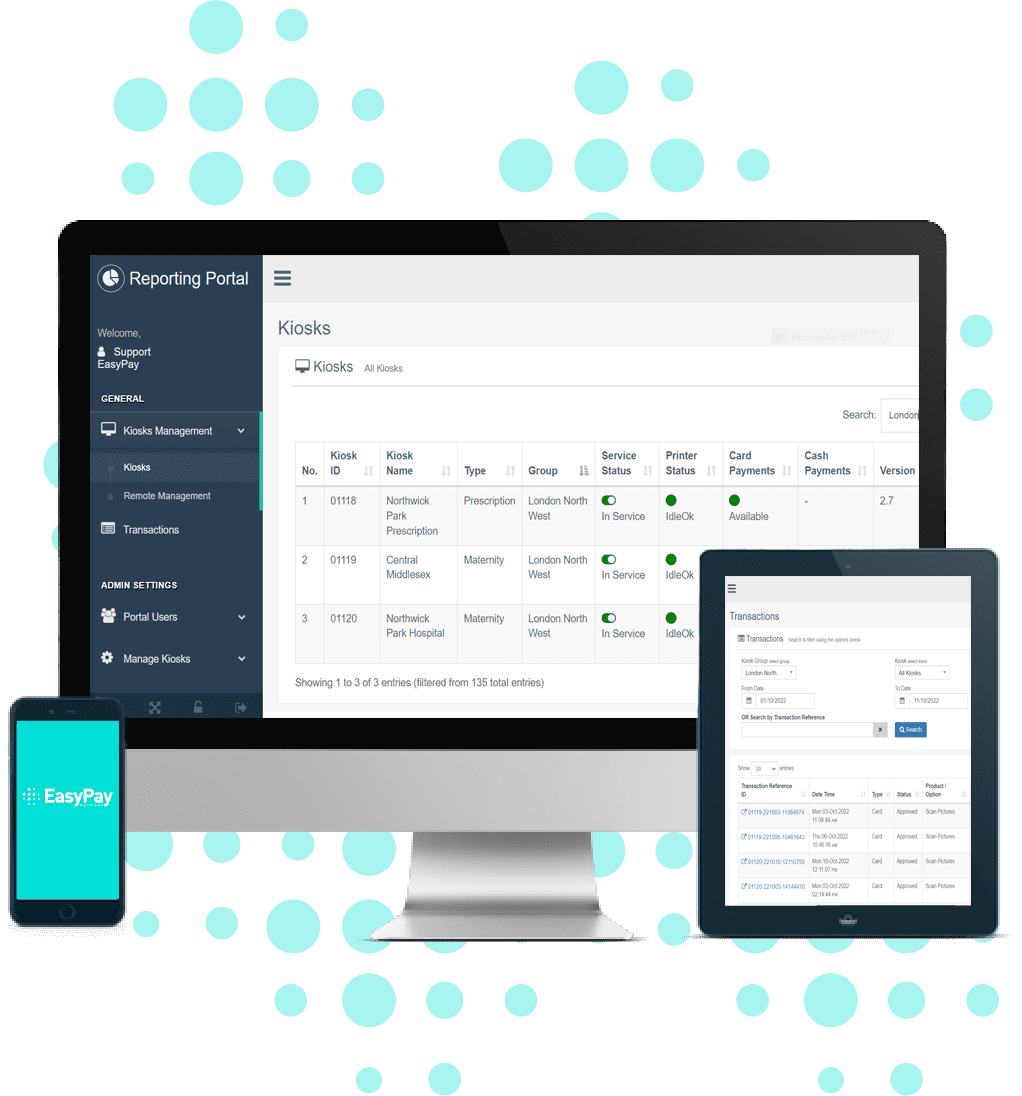
Prescription payment machines are not just about facilitating transactions; they are powerful tools for data analysis. Back-office staff can benefit from comprehensive analytics and reporting functionalities provided by our kiosks.
Insights into payment trends and transaction volumes can inform strategic decision-making, helping your NHS trust optimise operations for greater efficiency and cost-effectiveness.
The workload benefit therefore extends beyond the staff patients see. Finance and administrative teams also need clear information about which payments have been received, where they were made and which service they relate to.
Through our VincoPay software, authorised users can access transaction information and reporting without relying on handwritten notes or disconnected payment records. This can make reconciliation easier and provide better visibility over prescription payment activity.
Better reporting can also help NHS Trusts identify patterns, such as when payments are being made, which kiosks are being used most frequently and where payment processes may need adjusting.
5. Fewer Missed Payments and Less Follow-Up Administration
When a patient cannot pay at the point they receive a chargeable prescription, the work does not disappear. In many cases, it simply moves elsewhere. A member of staff may need to provide alternative payment instructions, create a record of the outstanding amount or rely on the patient making contact again later.
That creates additional administration and increases the possibility of lost revenue. A self-service prescription payment kiosk gives patients the opportunity to complete the payment while they are already in the hospital and the reason for the charge is clear.
Capturing payment at that point can reduce the need for follow-up and help the Trust collect eligible income more consistently, including outside conventional office hours. For staff, that means fewer outstanding transactions to chase and fewer payment-related enquiries to resolve after the patient has left.
Supporting NHS Staff with a Simpler Prescription Payment Process
From reducing staff workload and promoting hygiene to ensuring uninterrupted reception services and offering robust analytics, self-service prescription payment machines help support your pharmacy staff and improve morale.
At VincoPay, we design our payment kiosks around the way NHS services actually operate. Our systems can be tailored to individual departments, with straightforward touchscreen interfaces, secure card payments and reporting tools that support both frontline and back-office teams.
The objective is not simply to replace one payment method with another. It is to remove unnecessary steps from the process so that patients can pay more independently and staff spend less time managing routine transactions.
For more information about the wider operational benefits, visit our kiosk benefits page.
If your NHS Trust is reviewing how prescription payments are currently handled, contact us to discuss where self-service payment could reduce staff workload and improve the patient journey.
Frequently Asked Questions
How do prescription payment kiosks reduce workload for NHS staff?
Can patients use prescription payment kiosks outside normal office hours?
Can VincoPay kiosks support payments for services other than prescriptions?
Do prescription payment kiosks help finance teams as well as frontline staff?
Can VincoPay kiosks be tailored to an individual NHS Trust?